
How are traditions preserved? Traditions, whether they are cultural, family, or religious, are passed down from older generations to the younger ones in many different ways: through storytelling, language, cultural norms, and etiquette.
Think of an object that has been in your family for generations. It, too, has a story. The object might be a photograph, a candlestick, a watch, a book, any artefact or in fact anything. If you do not know its story, a family member may know. All you need to do is ask.
Think about the events such an object may have “witnessed” in a family and the hands it would have passed through. Many people are lucky enough to be able to hold such objects, touch them and see them with their own eyes. These items have survived the test of time. These objects are often a symbol of all the traditions passed down in families.
Question:
Do you have any artefacts that have been passed down in your family?
Answer:
Nazi soldiers killed close to a million Jews on modern-day Belarusian territory and destroyed their family traditions along with them. After the war, those Jews who survived the Holocaust could no longer openly share the cultural and religious traditions they grew up with because the Soviet Union was an atheistic country.
Objects, as well as traditions, lost their meaning after the war and so did the history of Jewish Belarus. Many families and their traditions were ruptured both by the occupation by Nazi Germany and the Soviet era, and never had the chance to rebuild. Hitler planned to annihilate all Jews. The Soviet Jews who survived the Holocaust were unable to reclaim their Jewish lives because of the Soviet ban on all religions. Everyone was impacted and so many people lost so much.
If there is no one left to tell you about an object, an heirloom or a tradition, then has it lost its meaning?
The spoon
Some objects passed down through families are deeply emotional and carry a powerful story.
Arthur Poznanski experienced rabid antisemitism as a small child in Poland. He was sent to a concentration camp and escaped certain death. It was a spoon that saved his life. Victor Poznanski, Arthur’s son, has the spoon. It is a family heirloom that tells the story. Click the video to watch the short animation about why this spoon is so special.
Did you know?
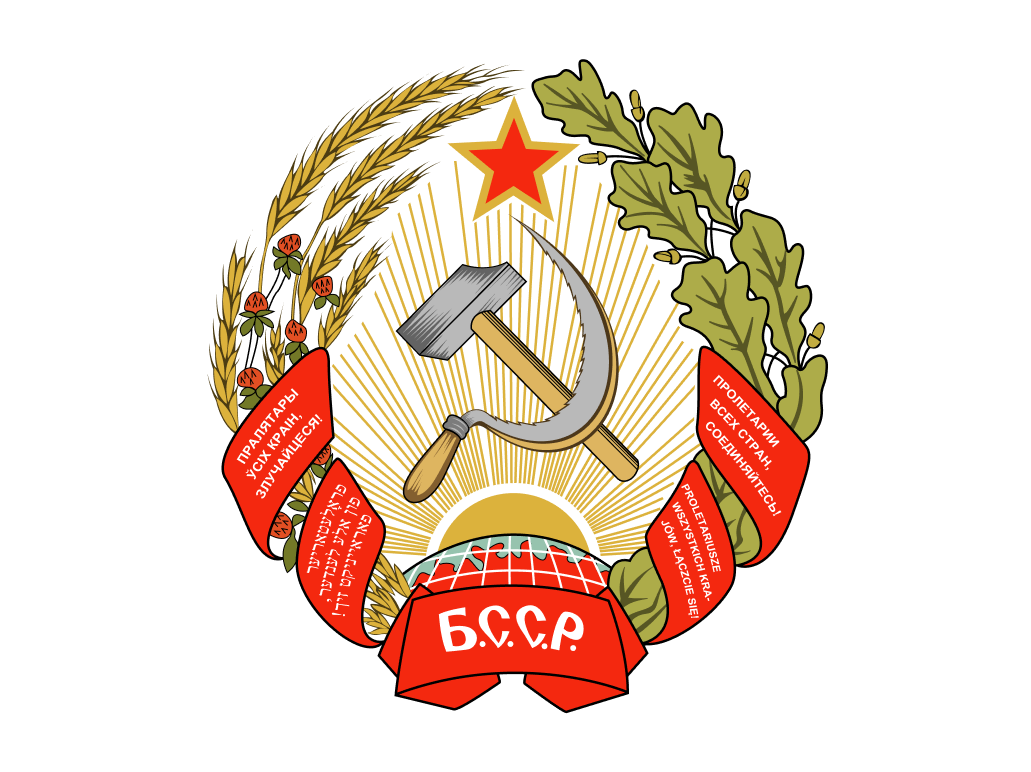
Yiddish was an official language of the BSSR
Can you spot it on this emblem?
Click the image to enlarge.
Belarusian Soviet Socialist Republic (BSSR) emblem (1927-1937).
Here you will find a timeline of the history of Jewish Belarus:
Slavic people settle in what is now Belarus.
Large numbers of Ashkenazi Jews move to Belarus from Germany, because life for German Jews was getting worse by the day. With them, they brought Yiddish to the land.
Jews from France and England (western Europe) move to Belarus (then known as the Grand Duchy of Lithuania) because of persecution.
Sephardic Jews are expelled from Spain and some move to the lands that are today Belarus during the Spanish Inquisition.
Belarus is one of the most important centres for Jewish Talmud education. Local community leaders work on strengthening the unity of the Jewish nation and developing their national identity.
Cossack leader Bogdan Khmelnitsky leads waves of violence against Jews in the region. Tens of thousands of Jews lose their lives to massacres.
Belarus becomes part of Imperial Russia. Jews are forced to live in a specific area called the Pale of Settlement. They are forbidden to live outside the region. The territory that is modern-day Belarus was at the heartland of the Pale of Settlement.
A wave of pogroms takes place across the Russian Empire, including Belarus, meaning violent acts committed against Jews, simply because of the fact that they are Jewish. Thousands of Jews begin moving from Belarus to other parts of the world where they would be accepted, such as the United States, South Africa and Palestine.
A revolution takes place in which the Russian Empire collapses and the Soviet Union is established. Belarus becomes a Soviet Republic, and many Jews move to Poland and Lithuania because of Soviet antisemitic policies. The capital of Belarus, Minsk, continues to be the city with the largest Jewish population in the entire Soviet Union.
Nazi Germany invades the Soviet Union, bringing the Soviet Union into the Second World War. With the German invasion of these Soviet-occupied lands, the German Nazis bring their programme of murder that had begun with their invasion of Poland in 1939 into Belarus. Jews are forced into ghettos where the amount of food and medicine allowed in is tightly controlled. Jews are forced to work in slave labour conditions. Accompanying the regular German army, the Wehrmacht, are specially trained murder squads, the Einsatzgruppen, whose specific mission is to round up Jews and Soviet partisans and sympathisers, take them to the forests and ravines, and shoot them. The population of Belarus in 1941 was 10 million, and 12% were Jews. Between 800,000 and 1,000,000 Jews were killed in Belarus. Among them were also Western European Jews, who were brought to Belarus to be killed.
The heads of German government departments meet at the Wannsee Villa near Berlin to organise what became known as the "Final Solution". The Nazis used the vague term "Final Solution" to hide plans for mass destruction from the rest of the world. A new solution to the Jewish question was proposed: "deportation of the Jews to the east", which meant their removal from their homes and subsequent deportation to death camps, where they would be killed upon arrival. Maly Trostenets, near Minsk, became one of these death camps where Jews were brought from as far away as Vienna.
Some Jews manage to escape being killed and flee to the thick marshy forests of Belarus to join forces with partisans, armed fighters who did not belong to the official Soviet army, but fought against the German invaders.
The Soviet Union was an atheistic state. There was no religious freedom. Jews are identified by birth but are considered Soviet citizens first and foremost. Memorials at mass murder sites identified those killed as Soviet citizens, not specifically as Jews. The Jewish history of Belarus and elsewhere is not taught. These important Jewish stories are yet to be told.
Israel's success in the Six-Day War prompts a wave of Soviet anti-Israelism, which in turn sparks the interest of many young Soviet Jews towards Israel and their Jewish heritage.
Many Soviet Jews want to emigrate to the United States and Israel, but the Soviet Union refuses to allow them exit visas. They became known as 'Refuseniks', and a worldwide campaign in the West worked for their right to emigrate.
The Soviet Union collapses, and the Republic of Belarus is officially formed. Belarusian Jews continue to emigrate to Western countries and Israel, shrinking the Jewish population of Belarus.
The population of Belarus is approximately 9.4 million, and the number of Jews is officially 14,000, but unofficially it’s likely closer to 50,000.
Jack Kagan
Jack Kagan was ten years old when the Germans invaded Poland in 1939. He was born in Novogrudok, which at the time was Poland but is today in Belarus. He and his family were put into a labour camp. Day by day, there were fewer Jews in the camp as they were rounded up and taken to be shot. A few courageous prisoners decided that they would tunnel their way out of the camp.
Jack escaped and reached a brigade of Jewish partisans, where he learnt how to fight and fend for himself. Only one of Jack’s family members survived the war. The rest were killed.
Years later, Jack and his cousin Dov published a book about their experiences, Surviving the Holocaust with the Russian Jewish Partisans. There were pictures of family members featured in the book, and it raised the question of how those pictures managed to survive, if all other family possessions were either stolen or destroyed?
By asking Jack, we discovered that he hid family photographs in his hat. A hat that he managed to keep with him in the labour camp, the tunnel escape and in the forest as a partisan. In this way, he was able to keep the physical memory of his family alive. He passed the pictures to the next generation by publishing them in his book. Jack Kagan passed away in 2016.
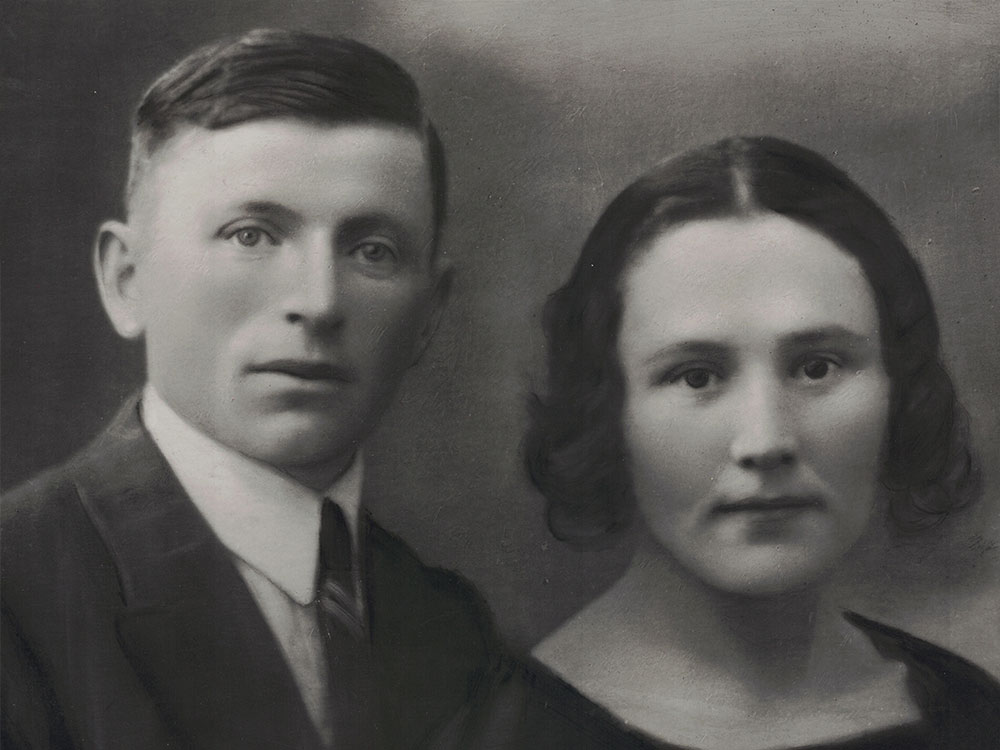
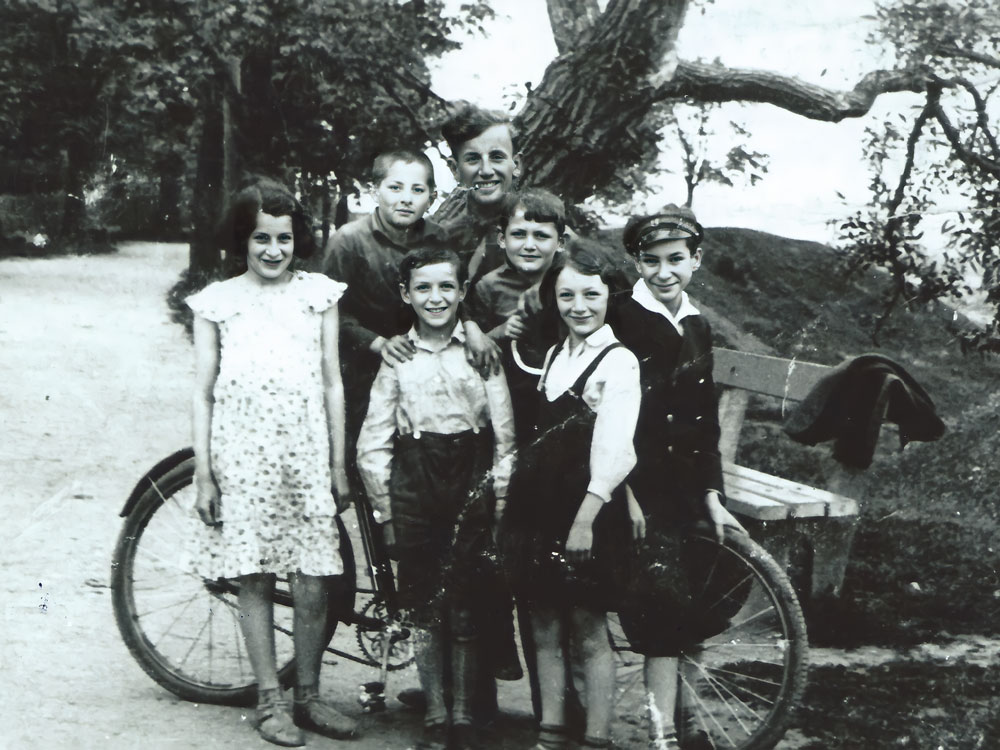
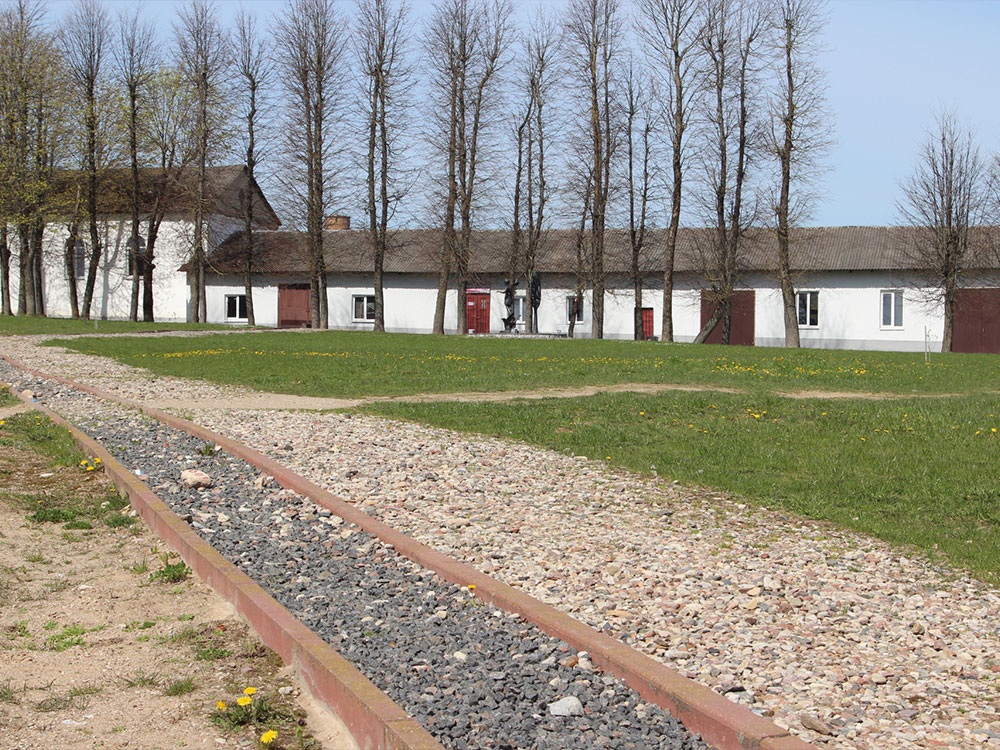
Thank you to Michael Kagan for letting us use his father’s pictures.
Question:
What’s the oldest family picture you have?
Answer: