
It is vital, when learning about the Holocaust, to explore the driving force behind it: antisemitism. Antisemitism means hostility, hatred and discrimination against Jewish people and their institutions solely because they are Jews.
The word Semite refers to a number of different peoples from southwestern Asia, including Jews and Arabs.
Antisemitism refers only to discrimination against Jews.
The Holocaust was not something that happened instantly – it was the result of centuries of antisemitism that snowballed into the systematic, industrial murder of Jews solely because they were Jews.
History of antisemitism
From the early Roman Empire through the Middle Ages, Jews were considered an alien people, and segregated from the rest of the population. Most Jews in Europe lived in what today would be considered ghettos. They were not allowed to hold positions in government or the military and were forbidden to work in certain professions.
One of the main positions Jews could hold was in moneylending, usury, as Christians considered lending money a sin. This created one of the most widely propagated antisemitic stereotypes, still prevalent today, in that Jews are obsessed with money, are greedy, are not fair in their financial dealings, and are connected to a conspiracy to control the world’s economy.
The Nazi regime took inspiration from the history of antisemitism and built on it. Among their first acts on coming to power was to segregate Jews from the general German population by removing the protection of German citizenship from German Jews. By the time the Germans forced the Polish and then other Jews into ghettos after the war had started, the idea of Jewish ghettos was not new.
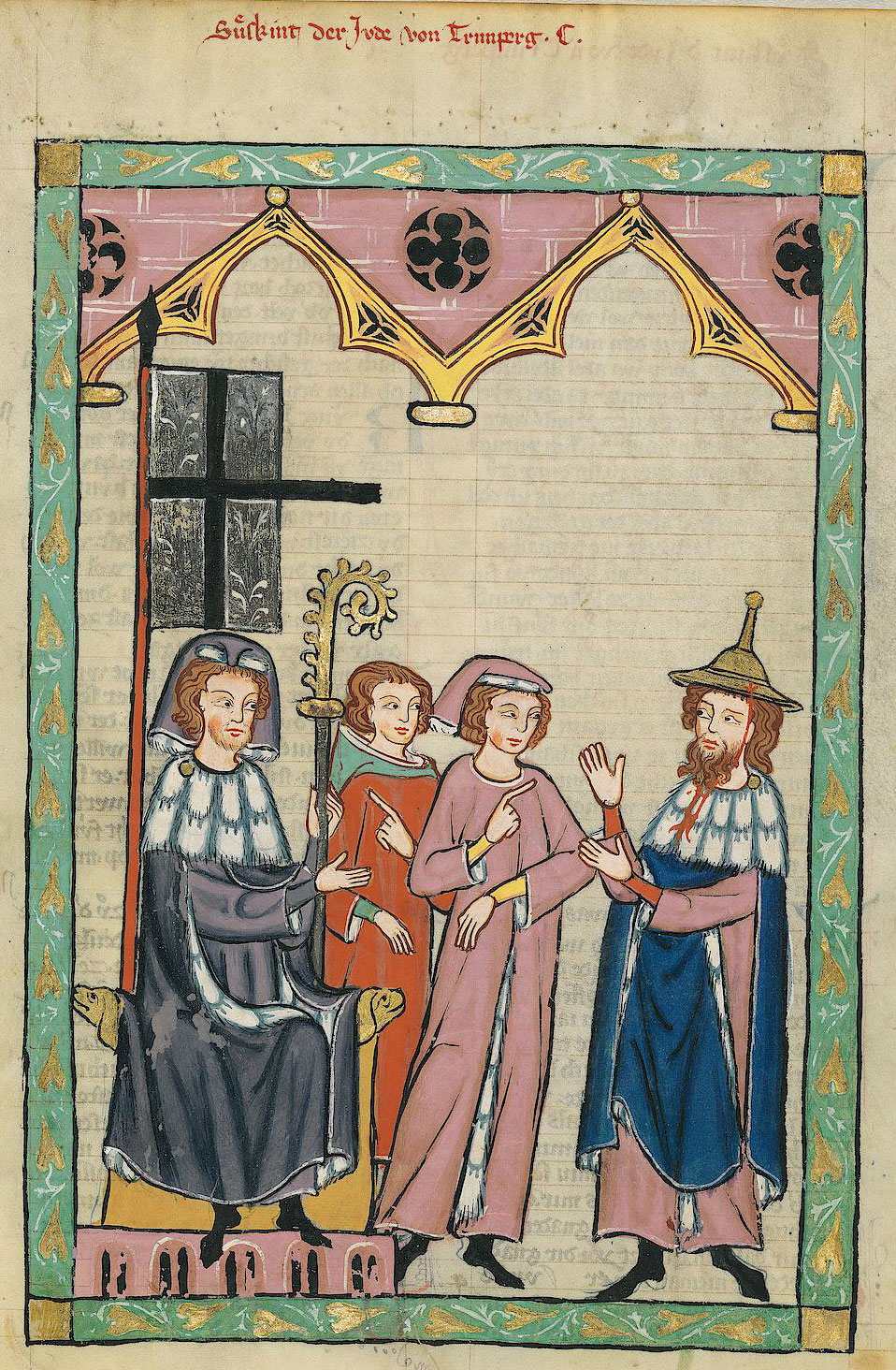
The yellow Star of David badges that Jews were eventually required to wear as identification were also a concept from the Middle Ages when Jews in Spain, France, England, Germany, and Austria had to wear a distinct garment that would identify them as Jews. Among these identification marks were a Judenhut (“Jew-hat” in German) or a red Star of David badge.
One of the key aspects of the Nazi regime was their plan to create an Aryan “Master” race based on hair and eye colour and other physical features which stemmed from the concept of an Aryan bloodline. Jews, among many others, which included the physically and mentally disabled, did not fit into the Nazi idea of a pure Master race. The idea of race was a prevalent theme in those days, and the Nazis took it to an extreme in their plan to rid the world of inferior races.
Hitler used antisemitic stereotypes to separate Jews and blame them for all of Germany’s problems, thus creating a scapegoat. Without the rights of citizenship, Jews were powerless to maintain their rights. Germans who did protest were sent to brutal German concentration camps that had been established within the first few months of the Nazi Party gaining power.
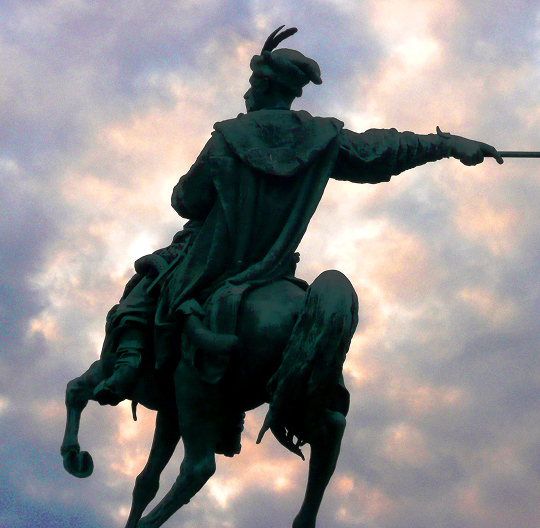
Before the 1600s, the Polish-Lithuanian Commonwealth was a safe place for Jews who had escaped from Western Europe. In 1648, a Ukrainian Cossack named Bogdan Khmelnitsky organised a nationalist uprising against the Commonwealth, which consisted of pogroms where tens of thousands of Jews were brutally killed.
During the Russian Empire, Jews were forced by Catherine the Great to live in an area called the Pale of Settlement (at the centre of which is today’s Belarus), which existed between 1791 and 1917. Jews were, on occasion, subjected to pogroms, violent mob attacks without retaliation. This only worsened when Tsar Alexander II’s assassination in 1881 was blamed on the Jews, so his son Alexander III implemented harsh discriminatory policies against Jews which in turn justified the pogroms.
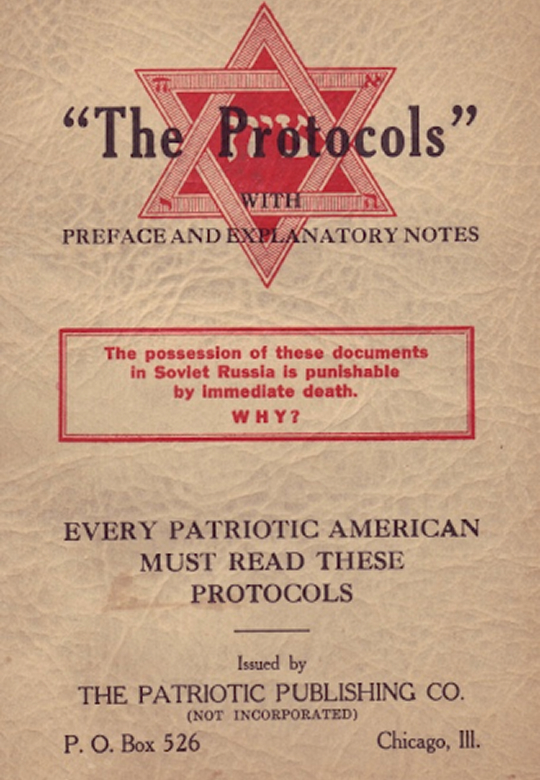
Antisemitic behaviour was on the rise in the Russian Empire in the 1890s, and a new conspiracy came out of Russia in a fake document called the Protocols of the Learned Elders of Zion, which claimed that Jews were planning to achieve world domination. The Russian secret police created this document to justify the Russian Empire’s antisemitism, and it was translated to many other languages, making its way through Europe and the USA…and this was before the Internet.
This document is considered to be one of the most influential works of antisemitism ever written, as the document was propagated all over the world as evidence of a Jewish conspiracy. It falsely justified antisemitism and brought fear, discrimination and hatred towards Jews to this day.
Discrimination against Jews continued after the Holocaust in the Soviet Union. An important aspect of Soviet antisemitism was its anti-Zionism. Zionism is a belief in the creation of a Jewish national homeland in the ancestral land of Israel. After the Six Day War of 1967, in which the Soviet Union had supported the Arab countries in their fight against Israel, the Soviet Union adopted an anti-Israel stance as the government considered Zionism as an imperialist and anti-Soviet movement.
The Soviet government used its anti-Zionism to justify its antisemitism. Worldwide attacks against Jews and Jewish institutions are today often used as an excuse to influence the Israeli political situation regarding the country’s Arab neighbours.
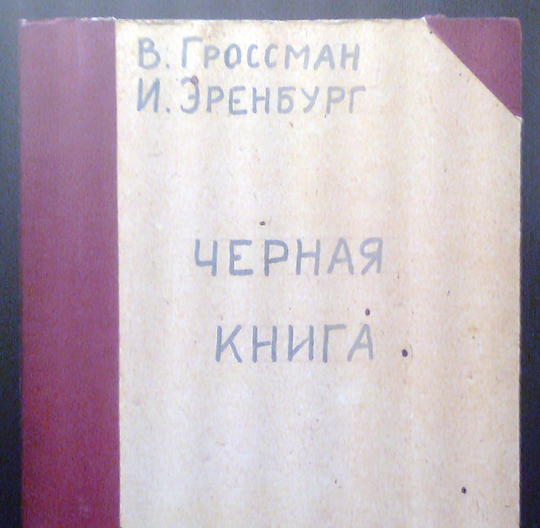
The Black Book
One of, if not the most important books about the Holocaust in the Soviet Union was written in 1948…however, its first full Russian copy was published only in 1993. Labelled The Black Book of Soviet Jewry, or simply “The Black Book”, it was a compilation of first-hand accounts written by Holocaust survivors from all over the Soviet Union, to make sure that their stories were told.
Ilya Ehrenburg and Vassily Grossman collected and compiled documents of accounts by survivors from Ukraine, Belarus, Russia, Latvia and Lithuania. The book was an effort made by the Jewish Anti-Fascist Committee (JAC) (1941-1952) to make sure the Soviet Jewish story would be documented and available to future generations. The JAC was tasked to highlight the German atrocities throughout the war, and show the world that the Soviet forces were fighting true evil.
Solomon Mikhoels
During Joseph Stalin’s (1878-1953) time in power, a series of purges were held, targeted at thousands of people for anti-Soviet behaviour, many of whom were Jews. During the 1930-1950s, a series of purges were held, targeted at thousands of people for anti-Soviet behaviour, many of whom were Jews. Many people were convicted, tried and executed for false accusations, even if they were solely based on suspicion or hearsay.
Jewish culture was being lost, though one man managed to bypass the initial repressions and became an important figure in Soviet Jewry. His name was Solomon Mikhoels. Born in 1890 in modern-day Latvia, Mikhoels established the Moscow State Jewish Theater, where he was an actor and later director for many years. The performances were in Yiddish, where Mikhoels played leads such as Tevye the Milkman (later popularised in the 1971 film Fiddler on the Roof) and King Lear in the Yiddish translations of Shakespeare.
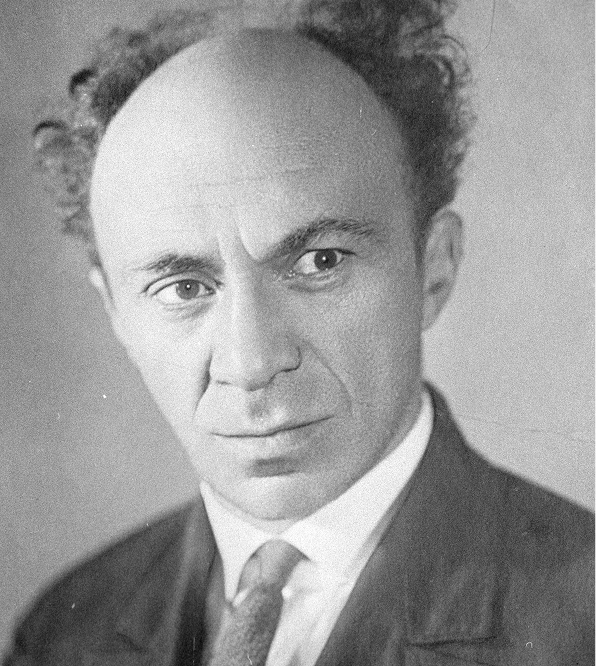
During the 1930s, Mikhoels was in danger during the Great Purges, though he managed to avoid being arrested, tried and executed like so many other Soviet Jews. Soon after Germany invaded the Soviet Union in 1941, Mikhoels hosted a gathering in Moscow’s Gorky Park, rallying Jews in the international community to raise funds for the Soviet war effort against the Germans. Thousands attended the event, and Mikhoels later became the Chairman of the Jewish Anti-Fascist Committee.
Mikhoels travelled around the world meeting with Jews from many countries and asking them to support the Soviet war effort against Nazi Germany. He achieved fame in the global community, meeting with famous internationally known Jews like scientist Albert Einstein, artist Marc Chagall, and world-famous silent film actor Charlie Chaplin. Mikhoels was getting the support that the USSR needed and his efforts raised millions of dollars for the Red Army. Mikhoels was involved with creating The Black Book and was arguably the first individual in the Soviet media to publicly speak about the mass murder of Jews.
After the war, the Soviet authorities considered Mikhoels to be too popular and a threat. A show trial convicting Mikhoels of treason would not have been accepted as he was so well known and well loved. The Soviet secret police killed Mikhoels in 1948, while he was in Minsk.
Mikhoels’ death was staged as an accident so that no suspicions would be raised. The Moscow State Jewish Theatre was closed and all the members of the Jewish Anti-Fascist Committee were arrested…only two survived the purges before Stalin’s death in 1953, a period of purges and repression.
What can we do against hate?
It is difficult to hear that antisemitism is still prevalent in the world today, but sadly it appears to be true. It is so vitally important to take action against antisemitism, and all forms of hate. We can do so by calling out someone who made an “innocent joke” about a stereotype. Adopting the mindset of “if I don’t respond, who will?” is key, because that way you lead by example to others, and inspire your peers to do the same.
There are many ways to tackle antisemitism, and one path we can take is to learn and show others just how far back the history of antisemitism goes. Talk about how fake news had spread across communities in the Middle Ages and created harmful stereotypes, which are still at the heart of antisemitism today. History is our most important resource to help us make a better and safer future.
The Holocaust happened less than a hundred years ago; in the context of all history, barely any time has passed between today and the most awful event imaginable. We need to cherish the memories of survivors and keep the history alive.